
If you talk to many modern Christians, they will tell you that “the Church” is a vast, mystical, invisible collection of every believer on earth. According to this view, it doesn’t really matter where you attend, or even if you attend at all, because you are automatically part of “the big church in the sky.”
It sounds spiritual on the surface, but there is a major problem with the “universal, invisible church” theory: it is nowhere to be found in the New Testament. It is a Catholic invention.
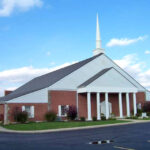
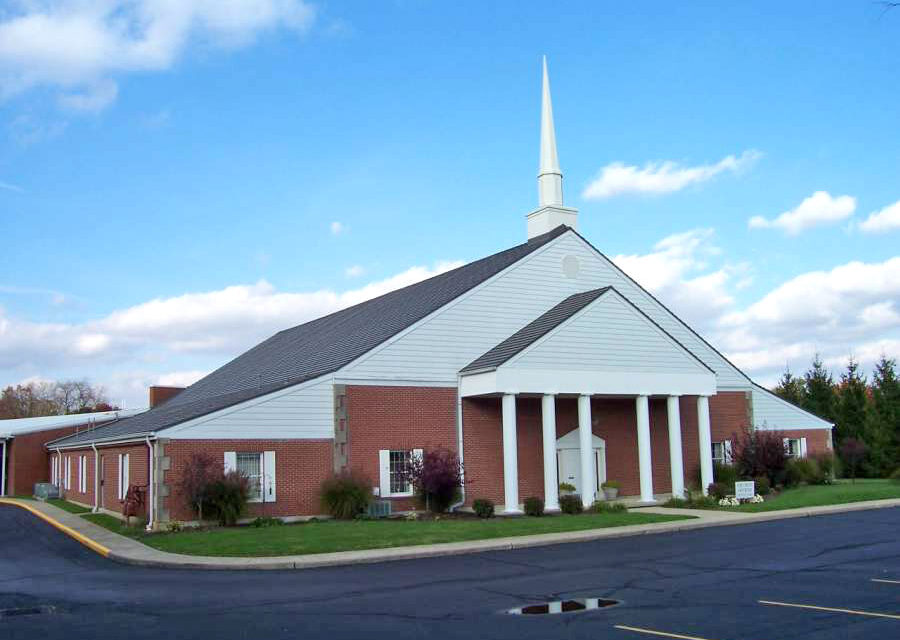
As Independent Baptists, we hold fast to the historic, biblical truth that a true church is always a local, visible, autonomous assembly of baptized believers. Understanding this isn’t just about winning an argument. It changes how we view accountability, worship, and the Great Commission itself.
What Does the Word “Church” Actually Mean?
To understand what a church is, let’s first look at the word in the Greek New Testament: ἐκκλησία (ekklesia).
Ekklesia is a compound of two words: ek (out of) and kaleo (to call). Literally, it means a “called-out assembly.”
Notice the key word there: assembly.
An assembly, by definition, requires people physically gathering together in a specific place at a specific time. You cannot “assemble” invisibly. You cannot “assemble” while scattered across five continents. And despite what modern culture claims, sitting on the couch in your pajamas watching a livestream is not “assembling.” There is no such thing as an “online church.”
Long before Jesus used the word ekklesia, it was a common political term in the Greek world used to describe a town meeting. It meant a localized, physical gathering of citizens called out of the general population to conduct business.
In fact, Scripture uses ekklesia in a secular sense in Acts 19:32 during the riot in Ephesus:
“Some therefore cried one thing, and some another: for the assembly [ekklesia] was confused; and the more part knew not wherefore they were come together.”
— Acts 19:32 (KJV)
Even non-Baptists have to admit the plain meaning of the text. The well-known 19th-century Methodist commentator Adam Clarke, who certainly didn’t hold to Baptist ecclesiology, confessed in his commentary on Acts 19:32:
“The same word which we translate church… signifies any assembly, good or bad, lawful or unlawful; and that only the circumstances of the case can determine the precise nature of the assembly to which this word is applied.”
If the word ekklesia meant a physical, local gathering at a pagan riot in Ephesus, it meant a physical, local gathering when Paul wrote to the believers in Corinth or Rome.
The New Testament Pattern: Churches, Not “The Church”
Out of the more than 100 times ekklesia appears in the New Testament, the overwhelming majority refer explicitly to a localized congregation in a specific geographic area.
Consider how the Holy Spirit consistently speaks of churches in the plural:
“Then had the churches rest throughout all Judaea and Galilee and Samaria…”
— Acts 9:31 (KJV)
“…unto whom not only I give thanks, but also all the churches of the Gentiles.”
— Romans 16:4 (KJV)
“And so ordain I in all churches.”
— 1 Corinthians 7:17 (KJV)
“…as I have given order to the churches of Galatia, even so do ye.”
— 1 Corinthians 16:1 (KJV)
We read about the church at Antioch, the church at Jerusalem, the church at Ephesus, and even small house churches: “Salute… Nymphas, and the church which is in his house” (Colossians 4:15).
When Jesus sent His final messages in Revelation chapters 1 through 3, He didn’t write one general letter to an “invisible, global body.” He addressed seven distinct, local, visible churches in Asia Minor, each represented by its own candlestick (pastor).
When the Bible speaks of “the church” in a general sense, such as in Ephesians 5:25 (“Christ also loved the church, and gave himself for it”), it is using the word institutionally or generically. It’s much like we say, “The American family is under attack.” We don’t mean there is one giant, floating “mega-family.” We mean the institution of the family, as lived out in countless individual homes.
Addressing Ephesians 5, Dr. Jack Hyles made this point in his book The Church:
“If anything refutes the invisible church, this is it. Jesus compares Himself and His church to a man and wife. Consequently, if there is an invisible church, then a man has an invisible wife. Jesus does not love an invisible church… He chose to use the visibility of a man and his wife. Jesus is talking about a visible organization which is His church and His body.”
Answering the Common Objections
When you stand up for the local church, people will immediately point to a few “proof texts” to defend the universal, invisible theory. Let’s look at how those passages actually line up with the rest of Scripture.
Objection 1: “Jesus said, ‘Upon this rock I will build my church’ (Matthew 16:18).”
People argue that Jesus was referring to one massive global church here. But notice how Jesus applies this just two chapters later in Matthew 18:17 when dealing with church discipline:
“And if he shall neglect to hear them, tell it unto the church: but if he neglect to hear the church, let him be unto thee as an heathen man and a publican.”
— Matthew 18:17 (KJV)
How can you “tell it” to an invisible, scattered body of millions of strangers? You can’t. Jesus was establishing a local, visible institution capable of hearing a matter, making a decision, and exercising authority.
Objection 2: “We are all baptized into one body (1 Corinthians 12:13).”
This is the favorite verse of the universal-church camp. But look at the context of 1 Corinthians 12. Paul is writing to a specific, local congregation at Corinth that was struggling with division. He uses the human body as an illustration of how their local members needed to work together.
Paul lands his point in 1 Corinthians 12:27:
“Now ye [the local church at Corinth] are the body of Christ, and members in particular.”
— 1 Corinthians 12:27 (KJV)
He didn’t say, “You are a tiny fraction of a global invisible body.” He said that local assembly was Christ’s body in Corinth. Each local church is a complete, functioning local body of Christ under His direct headship.
As Pastor Marvin McKenzie noted:
“We are the sons and daughters of God our Father. We are brothers and sisters in the faith. We are joint heirs with Jesus. But being family, we do not all reside in the same house.”
We are all in the Family of God by the new birth, but the Church is the local household of faith where that family assembles to do God’s work.
Objection 3: “What about the ‘General Assembly’ in Hebrews 12?”
In Hebrews 12:22-23, the writer speaks of “the general assembly and church of the firstborn, which are written in heaven.”
This passage isn’t describing an active, scattered earthly church today. It is describing a future, heavenly reality. One day, when Christ returns and gathers all the redeemed around His throne, there will be a truly universal gathering, because every saint will finally be assembled in one place, face to face. But until that glorious day, the only true church on earth is a local one.
Why This Doctrine Matters
This is not a matter of splitting theological hairs. The universal, invisible church theory is a dangerous compromise that leads to real spiritual damage:
- It Destroys Accountability: If the church is “invisible,” you don’t have to submit to pastoral leadership, be accountable to a local congregation, or faithfully attend. You can live however you want and claim, “Well, I’m still part of the big church.”
- It Undermines Church Discipline: You cannot discipline or restore a member in an “invisible” church. And you cannot love, serve, and care for one another as parts of the body as described in 1 Corinthians 12.
- It Opens the Door to Hierarchy: The idea of a single, global “Church” is the foundation of Roman Catholicism (which means “universal”) and Protestant denominational hierarchies.
Jesus didn’t leave His authority with a Pope, a convention, or a board of directors. He gave the Great Commission, the ordinances of baptism and the Lord’s Supper, and the keys of authority directly to local, autonomous churches.
Let’s cherish, serve, and love the local church. It is the pillar and ground of the truth (1 Timothy 3:15), and it is the exact institution Jesus promised to build and preserve until He comes back.
Recommended Further Reading
- The Church by Dr. Jack Hyles
- Does the Bible Teach a Holy Catholic Church? by Marvin McKenzie
- Ecclesiology: The Doctrine of the Church by B.H. Carroll