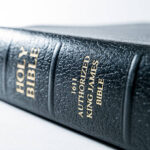


The New King James Version is usually presented as a harmless update of the King James Bible. Just easier English, people say. Same Bible, modern words.
It is not that simple.
The NKJV changes thousands of words, introduces footnotes pointing readers to corrupt manuscript traditions, and in several places replaces precise language with wording that can blur important doctrine. It may look like the King James Bible, but it does not read like it — and the differences are significant.
Some churches here in San Clemente use the NKJV, but they should get back to the KJV.
For ever, O Lord, thy word is settled in heaven.
— Psalm 119:89 (KJV)
The Narrow Way Is Not a “Difficult” Way
Jesus said:
“Because strait is the gate, and narrow is the way, which leadeth unto life, and few there be that find it.”
— Matthew 7:14 (KJV)
The NKJV changes this to:
“Because narrow is the gate and difficult is the way which leads to life…”
A narrow path and a difficult path are not the same thing. A narrow path means there is only one way through — no room to turn right or left. The Old Testament uses the same idea:
“And the angel of the LORD stood in a narrow place, where was no way to turn either to the right hand or to the left.”
— Numbers 22:26 (KJV)
That is the point of Matthew 7:14. The way to God is narrow because there is only one way: Jesus Christ.
“Jesus saith unto him, I am the way, the truth, and the life: no man cometh unto the Father, but by me.”
— John 14:6 (KJV)
A “difficult” way, on the other hand, suggests effort, struggle, and hardship as the price of entry. That is exactly how works-salvation preachers use this verse: “See, the way is difficult — you have to turn from your sins, change your life, and prove yourself worthy.”
But Jesus said:
“For my yoke is easy, and my burden is light.”
— Matthew 11:30 (KJV)
And the gospel command is not “struggle harder.” It is:
“Believe on the Lord Jesus Christ, and thou shalt be saved.”
— Acts 16:31 (KJV)
The KJV’s wording protects the gospel. The NKJV’s wording hands ammunition to those who would turn grace into a works program.
“Corrupt” Becomes “Peddling”
Paul wrote:
“For we are not as many, which corrupt the word of God: but as of sincerity, but as of God, in the sight of God speak we in Christ.”
— 2 Corinthians 2:17 (KJV)
The NKJV changes “corrupt” to “peddling”:
“For we are not, as so many, peddling the word of God…”
These are not the same thing. Corrupting the Word of God means altering it, adulterating it, mixing truth with error. Peddling means selling it for profit. Both are sins, but they are different sins — and “corrupt” is a far sharper warning against tampering with Scripture.
It is worth asking: why would a translation team remove the word “corrupt” from a verse about corrupting the Word of God?
“Study” Becomes “Be Diligent”
Paul told Timothy:
“Study to shew thyself approved unto God, a workman that needeth not to be ashamed, rightly dividing the word of truth.”
— 2 Timothy 2:15 (KJV)
The NKJV changes “Study” to “Be diligent”:
“Be diligent to present yourself approved to God…”
“Study” is a clear, specific command. It tells a Christian exactly what to do: get into the Book. “Be diligent” is vague. A man can be diligent about many things and never open his Bible. The KJV’s wording drives a believer straight to the Scriptures.
A Clear Second-Coming Reference Obscured
Isaiah 66:5 in the KJV reads:
“Hear the word of the LORD, ye that tremble at his word; Your brethren that hated you, that cast you out for my name’s sake, said, Let the LORD be glorified: but he shall appear to your joy, and they shall be ashamed.”
— Isaiah 66:5 (KJV)
The KJV plainly says the LORD shall appear to the joy of those who tremble at His Word. That is a Second Coming reference, and it fits the immediate context — the very next verse describes the LORD rendering recompense to His enemies:
“A voice of noise from the city, a voice from the temple, a voice of the LORD that rendereth recompence to his enemies.”
— Isaiah 66:6 (KJV)
The NKJV restructures the sentence so that the mockers say, “Let the LORD be glorified, that we may see your joy,” and then adds, “But they shall be ashamed.” The direct statement of the LORD appearing is gone. The reader is left with a weaker, less definite sentence.
The NKJV Is Not Simply the KJV With Modern Spelling
This is perhaps the most important point.
The NKJV’s own preface states that its Old Testament work used the Biblia Hebraica Stuttgartensia and consulted sources including the Septuagint, the Latin Vulgate, and the Dead Sea Scrolls. Its New Testament generally follows the Textus Receptus — but then includes footnotes referring the reader to the Critical Text and the Majority Text as alternative readings.
In other words, the NKJV tells the reader: “Here is what the Received Text says, but other manuscripts say something different.”
That is not updating the King James Bible. That is undermining confidence in it.
A Bible that constantly asks the reader to weigh competing manuscript traditions is not a settled Bible. It is a Bible with question marks in the margins.
“For God is not the author of confusion, but of peace, as in all churches of the saints.”
— 1 Corinthians 14:33 (KJV)
“Every word of God is pure: he is a shield unto them that put their trust in him. Add thou not unto his words…”
— Proverbs 30:5-6 (KJV)
Stay With the King James Bible
Should a church should trade the preserved Bible for a revision that changes key words, softens key warnings, and points readers toward the same critical texts behind the NIV, ESV, and the rest of the modern versions?
Absolutely not.
The King James Bible is clear. It is faithful to the Hebrew Masoretic Text and the Greek Textus Receptus. It has been tested by four hundred years of use, and it has never been found wanting.
“Thy word is true from the beginning: and every one of thy righteous judgments endureth for ever.”
— Psalm 119:160 (KJV)