

Introduction: Why This Doctrine Matters
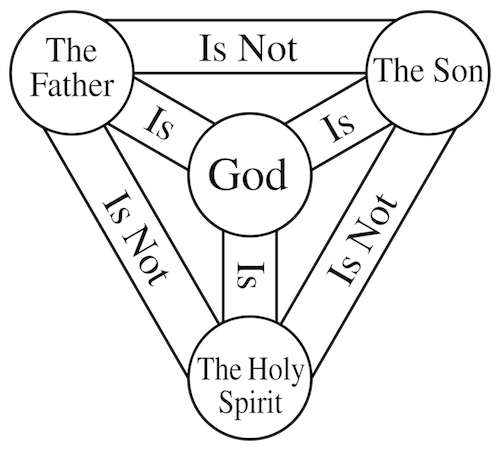
The Bible teaches that there is one God, and that this one God exists eternally as the Father, the Son, and the Holy Ghost. These three are not three gods. They are not three “roles” played by one Person. They are three distinct Persons, and yet one God.
That is the biblical doctrine of the Trinity.
Oneness Pentecostalism and Modalism deny this. They teach that Jesus is the Father, or that the Father, Son, and Holy Ghost are merely different manifestations, offices, or modes of one divine Person. But that doctrine does not fit the plain words of Scripture.
“For there are three that bear record in heaven, the Father, the Word, and the Holy Ghost: and these three are one.”
— 1 John 5:7 (KJV)
Notice the wording carefully.
There are three that bear record: the Father, the Word, and the Holy Ghost.
And these three are one.
The Bible does not say one Person pretending to be three. It says three are one.
That is the issue. We are not denying that Jesus is God. Jesus absolutely is God manifest in the flesh. But Jesus is not the Father. The Son is not the Father. The Holy Ghost is not the Son. The Bible gives us one God in three distinct Persons.
1. The Word Was With God and Was God
John opens his Gospel with one of the clearest statements in the Bible concerning the deity of Christ:
“In the beginning was the Word, and the Word was with God, and the Word was God.”
— John 1:1 (KJV)
This verse gives us both truths at once.
- The Word was with God — distinction.
- The Word was God — deity.
That destroys both false extremes. Jesus is not a created being, as the Jehovah’s Witnesses teach. But He is also not the same Person as the Father, as Oneness doctrine teaches.
The Word was with God, and the Word was God.
Then the Bible tells us who the Word is:
“And the Word was made flesh, and dwelt among us…”
— John 1:14 (KJV)
The Word is Jesus Christ. He is God. He became flesh. But He was also with God in the beginning. That is personal distinction.
2. The Father Sent the Son
One of the simplest ways to refute Oneness doctrine is to read what Jesus said about being sent by the Father.
Jesus said:
“And yet if I judge, my judgment is true: for I am not alone, but I and the Father that sent me.”
— John 8:16 (KJV)
He also said:
“Say ye of him, whom the Father hath sanctified, and sent into the world, Thou blasphemest; because I said, I am the Son of God?”
— John 10:36 (KJV)
And John wrote:
“And we have seen and do testify that the Father sent the Son to be the Saviour of the world.”
— 1 John 4:14 (KJV)
The Bible does not say the Father became the Son. It says the Father sent the Son.
A sender and the one sent are not the same person. The Father sent. The Son was sent. That is plain Bible language.
If Jesus is the Father, then the Father sent Himself, called Himself His own Son, prayed to Himself, loved Himself as another, and stood at His own right hand. That is not the doctrine of Scripture. That is confusion.
The Bible is clear: the Father sent the Son.
3. The Father and the Son Are Two Witnesses
Jesus made this point even stronger in John 8:
“It is also written in your law, that the testimony of two men is true.
I am one that bear witness of myself, and the Father that sent me beareth witness of me.”
— John 8:17-18 (KJV)
Jesus appealed to the law’s requirement of two witnesses. Then He identified the two witnesses:
- I am one that bear witness of myself
- The Father that sent me beareth witness of me
That does not work if Jesus and the Father are the same Person.
Jesus did not say, “I bear witness of myself in one mode, and then I bear witness of myself in another mode.” He said the Father bore witness of Him.
He said elsewhere:
“If I bear witness of myself, my witness is not true.
There is another that beareth witness of me; and I know that the witness which he witnesseth of me is true.”
— John 5:31-32 (KJV)
Notice the word another.
The Father is not the Son. The Father is another witness of the Son.
4. The Father Loves the Son
The relationship between the Father and the Son is not a temporary role-play. The Bible speaks of real love, real fellowship, and real distinction between the Father and the Son.
Jesus said:
“For the Father loveth the Son, and sheweth him all things that himself doeth…”
— John 5:20 (KJV)
John also wrote:
“The Father loveth the Son, and hath given all things into his hand.”
— John 3:35 (KJV)
The Father loves the Son. The Father gives all things into the Son’s hand.
This is not one Person acting out two parts. This is the Father loving the Son.
Oneness doctrine cannot honestly handle this language. If the Son is the Father, then the Father loves Himself as His own Son and gives all things into His own hand. But the Bible does not speak that way.
The Bible reveals a real Father and a real Son.
5. The Father Committed Judgment to the Son
Jesus said:
“For the Father judgeth no man, but hath committed all judgment unto the Son:
That all men should honour the Son, even as they honour the Father.
He that honoureth not the Son honoureth not the Father which hath sent him.”
— John 5:22-23 (KJV)
This passage is devastating to Modalism.
- The Father judges no man.
- The Father committed all judgment to the Son.
- All men must honour the Son even as they honour the Father.
- The Son was sent by the Father.
Again, the Bible does not blur the Father and Son into one Person. It distinguishes them clearly while giving divine honour to both.
The Son is worthy of the same honour as the Father because the Son is fully God. But the Son is not the Father.
6. Jesus Had Glory With the Father Before the World Was
John 17 is one of the strongest chapters in the Bible against Oneness doctrine.
Jesus prayed:
“Father, the hour is come; glorify thy Son, that thy Son also may glorify thee.”
— John 17:1 (KJV)
Then He said:
“And now, O Father, glorify thou me with thine own self with the glory which I had with thee before the world was.”
— John 17:5 (KJV)
Do not miss those words: “with thee before the world was.”
The Son had glory with the Father before the world existed. That is not merely a temporary role during the earthly ministry of Christ. That is eternal distinction.
- Before Bethlehem, the Son was with the Father.
- Before creation, the Son had glory with the Father.
- Before the world was, the Father and Son were distinct.
Modalism cannot survive John 17.
Continued in Part 2… coming soon!